.png)
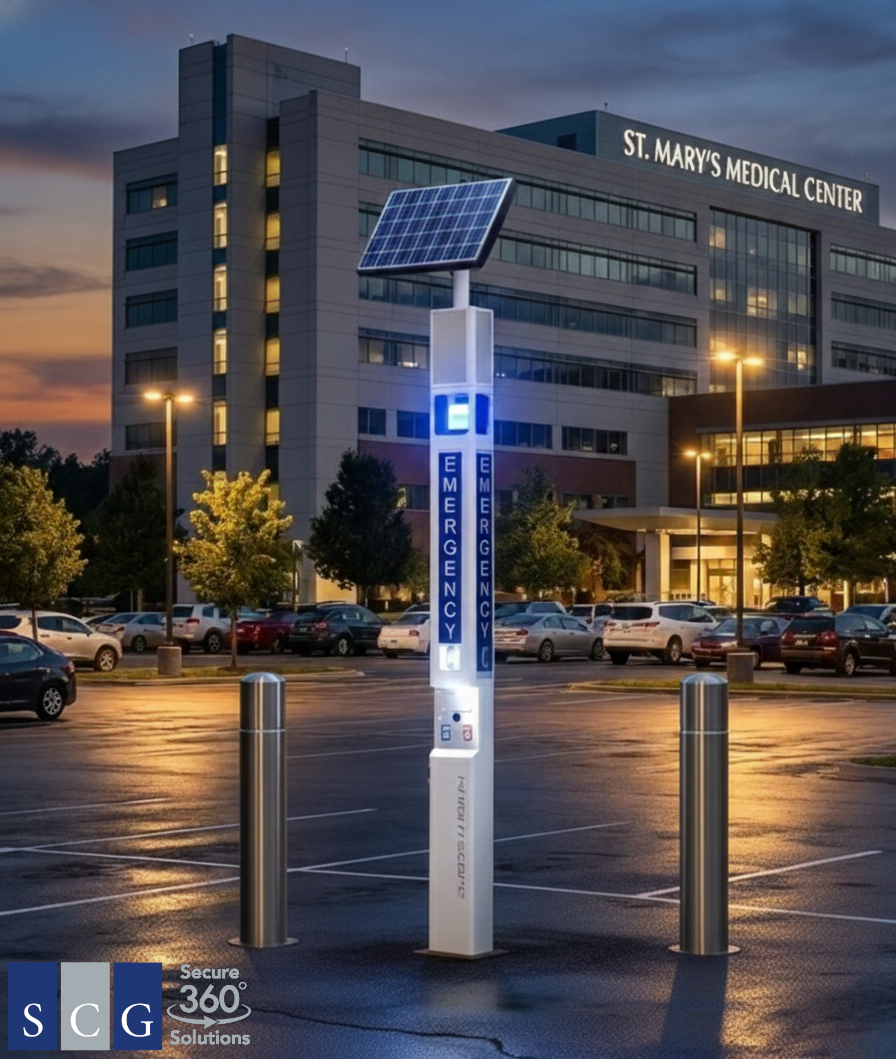
Hospital campuses never truly sleep, which creates a unique set of security challenges that simple patrols can't always cover. Emergency blue light towers and call boxes serve as a critical, 24/7 safety net for patients, visitors, and staff who find themselves navigating vast parking garages or sprawling outdoor walkways.
These towers aren’t just communication tools; they are highly visible “help points” designed for high-stress moments where seconds count. By providing a direct, one-touch line to security, hospitals can offer an ADA-compliant way for anyone—including those with mobility issues or those in the middle of a medical crisis—to summon help without needing to know a specific phone number or even their own exact coordinates.
A common question is whether these towers are still relevant in an era where everyone has a smartphone tucked in their pocket. The reality is that personal devices are surprisingly fragile in a true emergency. A phone battery can die, a screen can shatter during a fall, or cellular “dead zones” in concrete parking decks can render a mobile call impossible. Blue light towers solve this by providing a hardwired, fail-safe alternative. When a button is pushed, security dispatchers receive an instant, pinpointed location of the caller, bypassing the GPS lag or “pinging” delays often associated with 911 mobile calls. In a moment of sheer panic, fumbling with a passcode or facial recognition is a barrier; hitting a giant red button is an instinct.
Beyond their functional use, the physical presence of these glowing beacons acts as a powerful psychological shield. The “beacon effect” creates a measurable deterrent for criminal activity; for instance, data from similar campus environments, like Rice University, showed a staggering 67.74% decrease in property crime after these systems were optimized. When a hospital parking lot is dotted with blue lights, it sends a clear message to potential bad actors that the area is monitored. For a nurse finishing a double shift at 3:00 AM, that blue glow provides a sense of “perceived safety,” reducing the anxiety of walking alone and ensuring that a witness—and help—is always within sight.
The institutional adoption of this technology remains incredibly high due to both safety and legal necessity. According to the Bureau of Justice Statistics, roughly 92% of large-scale campuses, including major medical centers, rely on these emergency systems. Hospital administrators often choose to install them to mitigate legal liability; by establishing a recognized “standard of care,” the facility protects itself against claims of negligence. Furthermore, these boxes are workhorses for non-emergency logistics. Security teams report that the majority of activations are for “quality of life” issues, such as requesting a walking escort, reporting a vehicle lockout, or asking for directions, which keeps the hospital running smoothly and efficiently.
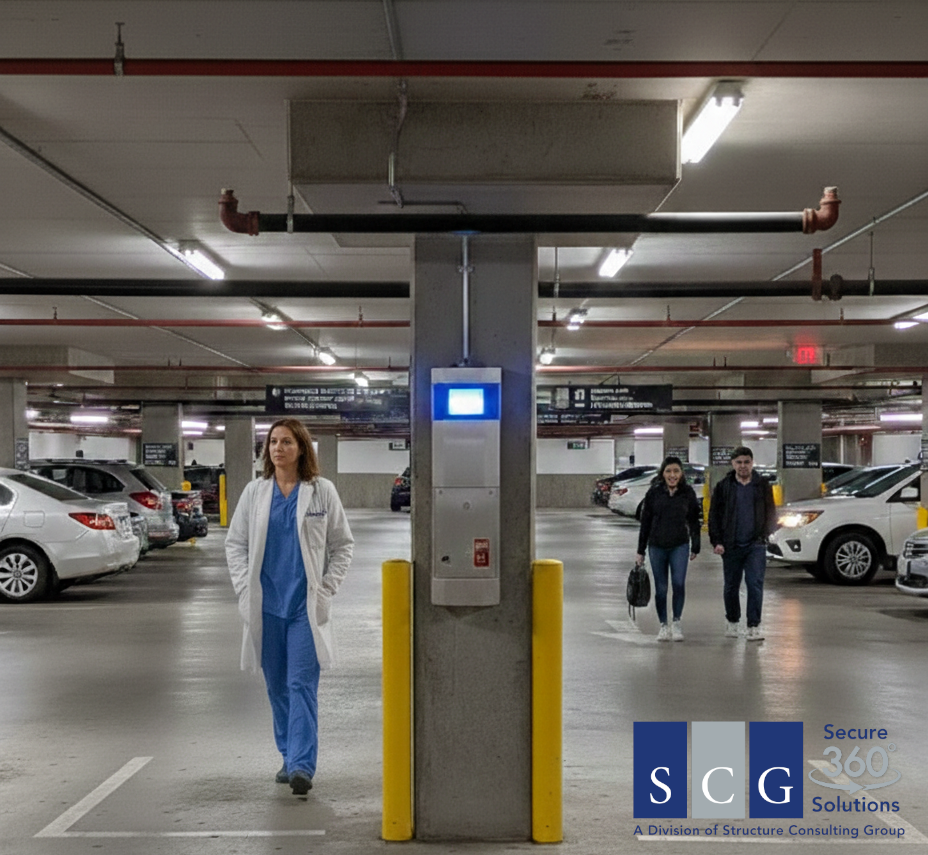
If you look closely at the blue light towers on a typical hospital grounds, you’re likely looking at hardware from the 1990s that’s really starting to show its age. Many of these units are still stuck on “POTS” lines—those old-school copper phone wires that telecom companies are rapidly abandoning in favor of digital. It’s a serious maintenance hurdle; a non-functional tower is arguably more dangerous than having none at all because it creates a “false sense of security” for someone in trouble.
To fix this, security teams are having to rip out the old analog guts and retrofit them with modern VoIP or 5G cellular kits. Regular upkeep here isn’t just a boring administrative recommendation—it’s a necessity to ensure that if a staff member or patient ever needs to hit that button, the system actually talks back.
Aside from hospitals or medical centers, emergency blue light towers are also frequently installed on college campuses, in municipal and public spaces, transit hubs, parking facilities, parks and recreational areas, and corporate campuses.
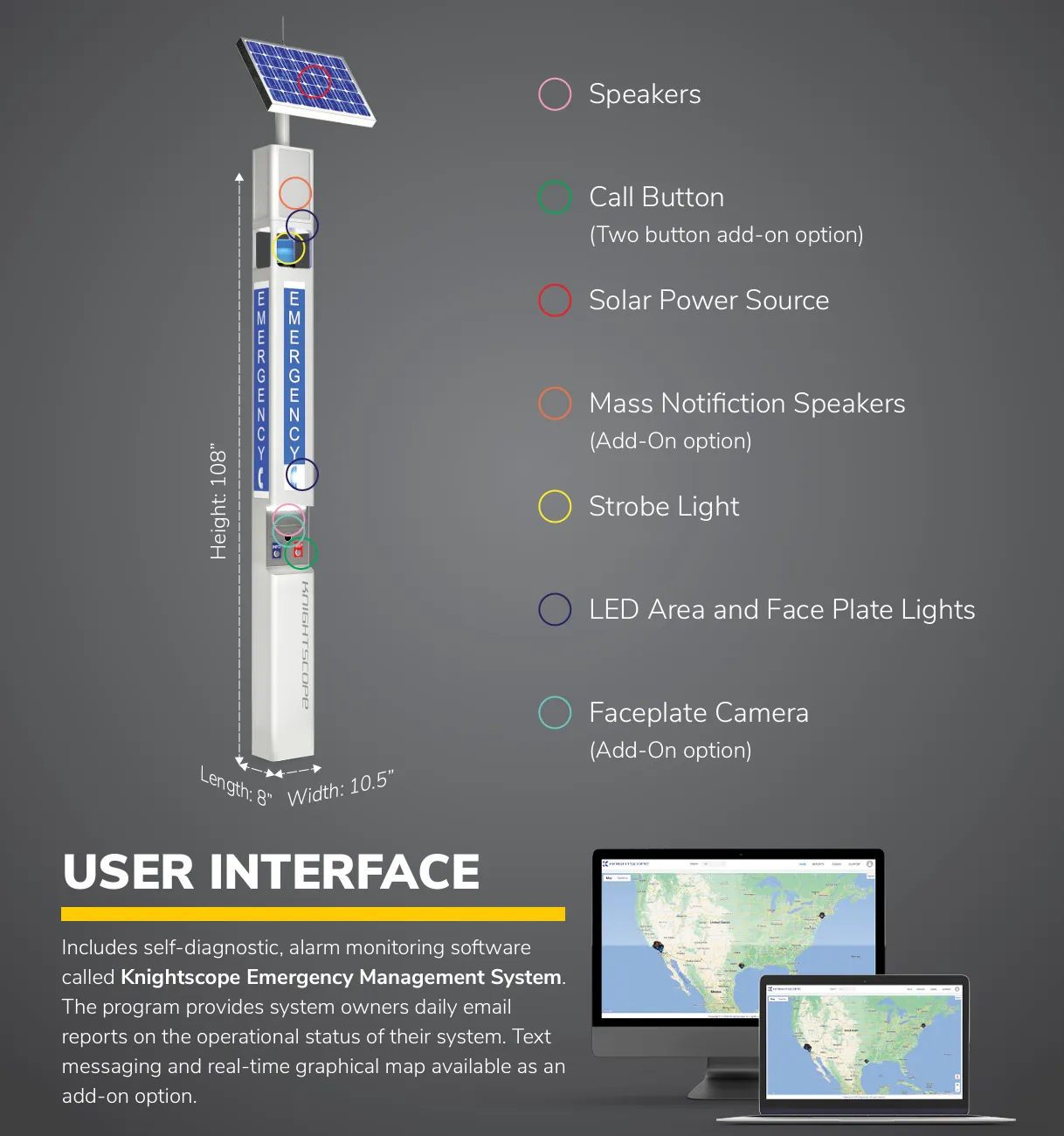
Knightscope Blue Light Towers have meaningful strengths compared to most other simple systems offered by competitors, including wireless, solar-ready, and flexible connectivity. They also have added features such as integrated cameras, PA systems, and lighting. One of the biggest differentiators is Knightscope’s Emergency Management System (KEMS) — a cloud-based platform that tracks tower status in real time, sends alerts if something goes wrong, and logs performance data. Knightscope’s towers are more sophisticated than most systems, and the overall value is greater given today’s need for more careful monitoring and quicker response times.
Customization: Every hospital and medical center is unique, and our lighting solutions can be tailored to meet your specific needs. Whether you need additional features such as surveillance cameras or public address systems, we can customize our towers to fit your requirements.
At Structure Consulting Group, we are committed to making campuses, roadways, workplaces, and neighborhoods safer. Our dedication to innovation and safety is reflected in our cutting-edge Emergency Blue Light Towers.
To learn more about the solutions we offer, please click here. If you have questions, we’d be happy to hear from you. Please feel free to call us at 781-791-7724 or email us at contact@structureconsulting.net.